
The Generous Church
Scroll to read a recap of Pastor John’s sermon from December 28, 2025
Let’s Break it Down
Biblical tithing teaches us to put God first in our lives, with the tithe belonging to God and going to where we're spiritually fed.
Key Takeaways
Abraham tithed out of faith and gratitude 430 years before the law was given, showing that giving is a matter of the heart, not obligation
Biblical tithing teaches us to fear God and put Him first in our lives by giving Him the first tenth of our increase
The tithe belongs to God and goes to the storehouse where you're being spiritually fed, while offerings can go anywhere
Agreement between spouses about giving is crucial and creates a powerful, peaceful place in marriage
Giving is not about the amount but about honoring God with every aspect of our lives, including our finances
Tap to watch Pastor John’s full sermon on Youtube
5 Day Devotional
Day 1:Following the Father of Faith
Devotional: When we think about heroes of faith, Abraham immediately comes to mind. His life was marked by extraordinary trust in God, even when circumstances seemed impossible. What's remarkable is that Abraham's faith wasn't just displayed in the big moments - like leaving his homeland or preparing to sacrifice Isaac - but also in the everyday decisions about his resources. Abraham chose to give a tenth of everything to Melchizedek, the priest of God Most High. This wasn't because a law commanded it - the law wouldn't come for another 430 years. Abraham tithed because his heart was full of gratitude and his faith was genuine. He understood something profound: everything he had came from God's hand. Today, we face the same choice Abraham did. Will we trust God with our finances, or will we hold tightly to what we think is ours? Abraham's example shows us that generous giving isn't about following rules - it's about following faith. When our hearts are truly grateful for God's provision, giving becomes a natural expression of that gratitude. Just like Abraham, we can choose to live by faith in every area of our lives, including our finances. His example reminds us that faith isn't just what we believe - it's how we live, especially when it comes to the resources God has entrusted to us.
Bible Verse
'So also Abraham "believed God, and it was credited to him as righteousness." Understand, then, that those who have faith are children of Abraham. Scripture foresaw that God would justify the Gentiles by faith, and announced the gospel in advance to Abraham: "All nations will be blessed through you." So those who rely on faith are blessed along with Abraham, the man of faith.' - Galatians 3:7-9
Reflection Question
In what ways can you follow Abraham's example of living by faith, particularly in areas where you might be tempted to trust in your own resources rather than God's provision?
Quote Abraham is called the father of our faith. And if anyone models faith, it's Abraham.
Prayer
Father, help me to follow Abraham's example of living by faith in every area of my life. Give me a heart of gratitude that naturally overflows into generous giving. Help me trust You with my resources just as Abraham trusted You with his. Amen.
Day 2:Putting God First Always
Devotional: There's something powerful about the word 'first.' When we put something first, we're making a statement about its importance in our lives. In our culture, we're constantly bombarded with messages about what should come first - career success, financial security, family needs, personal happiness. But God calls us to a different priority system. Biblical tithing isn't primarily about money - it's about position. When we give God the first tenth of our income, we're declaring that He comes first in our lives. It's a tangible way of saying, 'God, before I pay any bills, before I buy anything for myself, before I address any other need, I'm going to honor You first.' This practice teaches us something profound about the fear of the Lord - not a cowering fear, but a reverent awe that recognizes God's rightful place as the source of all our blessings. When we consistently put God first with our finances, it trains our hearts to put Him first in every other area of life. The beautiful thing about putting God first is that it doesn't diminish what comes after - it actually enhances everything else. When God has His rightful place in our lives, everything else falls into proper order. Our relationships improve, our peace increases, and our sense of purpose becomes clearer.
Bible Verse
'Be sure to set aside a tenth of all that your fields produce each year. Eat the tithe of your grain, new wine and olive oil, and the firstborn of your herds and flocks in the presence of the Lord your God at the place he will choose as a dwelling for his Name, so that you may learn to revere the Lord your God always.' - Deuteronomy 14:22-23
Reflection Question
What areas of your life might be competing with God for the 'first place' position, and how can you practically demonstrate that God truly comes first?
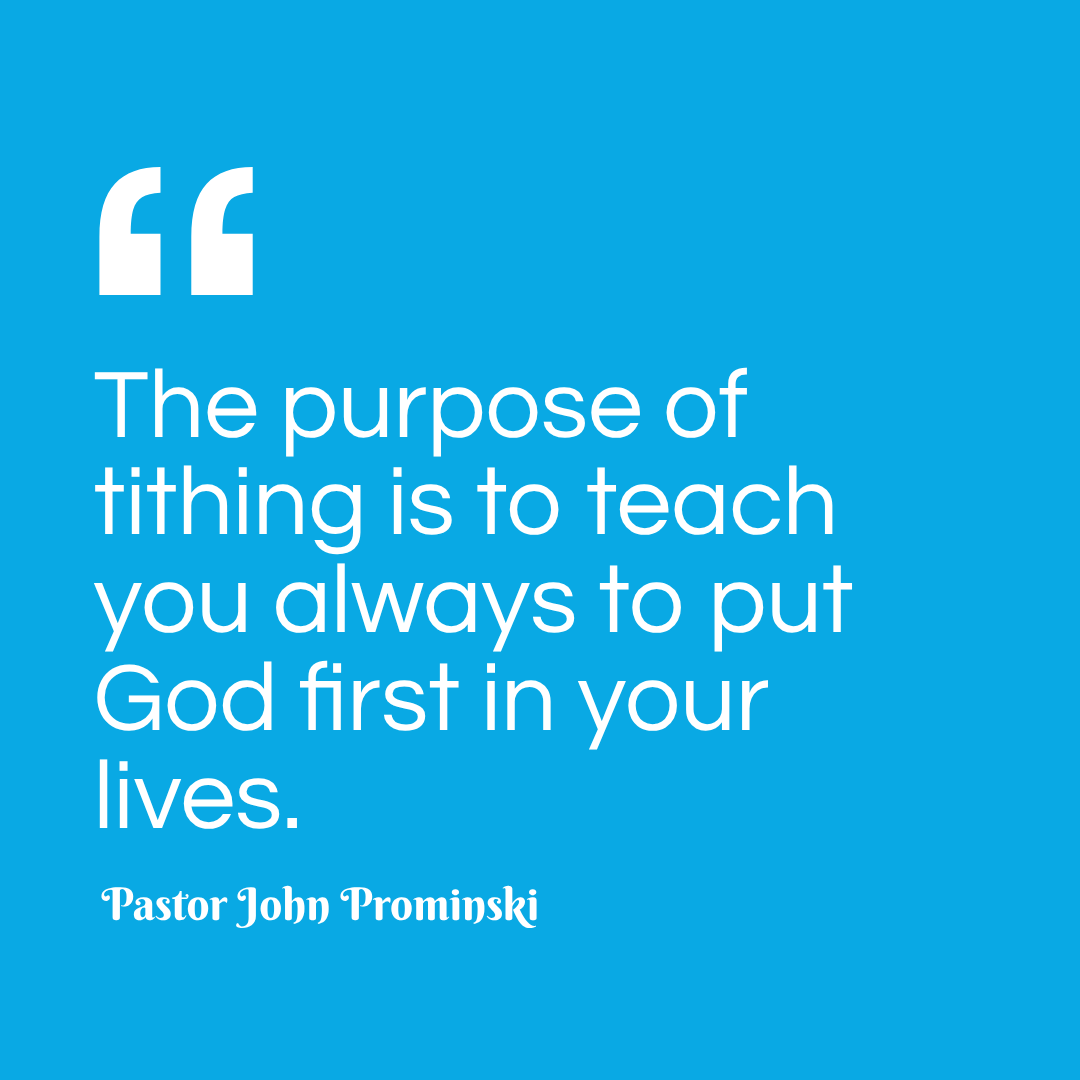
Quote The purpose of tithing is to teach you always to put God first in your lives.
Prayer
Lord, I want to honor You first in every area of my life. Help me to put You first not just with my words, but with my actions and my resources. Teach me to revere You always and to trust that when You come first, everything else will fall into place. Amen.
Day 3:What Belongs to God
Devotional: Ownership is a concept we take very seriously. We work hard for our money, we make sacrifices to build our savings, and we feel a natural sense of ownership over what we've earned. But Scripture presents us with a perspective that challenges our assumptions about ownership. The tithe isn't something we give to God - it's something that already belongs to Him. It's holy, set apart, designated as His from the moment it comes into our hands. This shifts our entire perspective from 'giving God our money' to 'returning to God what is already His.' Think about it this way: if someone asked you to hold their wallet while they went into a store, you wouldn't consider that money yours to spend. You'd be a steward, a caretaker of something that belongs to someone else. That's exactly our relationship with the tithe - we're stewards of what belongs to God. This understanding brings freedom rather than burden. When we recognize that the first tenth was never ours to begin with, tithing becomes less about sacrifice and more about faithfulness. We're simply being faithful stewards of what God has entrusted to us. The tithe should come to the place where we're being spiritually fed - our local church. Just as we wouldn't take someone else's wallet to a different location than they requested, we shouldn't redirect what belongs to God away from where He's called us to be planted and fed.
Bible Verse
'A tithe of everything from the land, whether grain from the soil or fruit from the trees, belongs to the Lord; it is holy to the Lord.' - Leviticus 27:30
Reflection Question
How does viewing the tithe as something that already belongs to God rather than something you're giving away change your perspective on tithing?
Quote The tithe is holy, belongs to God.
Prayer
God, help me to understand that everything I have comes from You and belongs to You. Give me the heart of a faithful steward who joyfully returns what is Yours. Help me to see tithing not as a burden, but as an opportunity to be faithful with what You've entrusted to me. Amen.
Day 4:The Power of Agreement
Devotional: Marriage is a beautiful partnership, but it can also be a place where different perspectives create tension - especially when it comes to money. Financial decisions can either strengthen a marriage or create significant stress, depending on how couples navigate them together. When it comes to giving, agreement between spouses isn't just helpful - it's essential. There's something powerful that happens when two people come into unity about honoring God with their resources. Agreement creates a place of peace and power that transforms not just the decision itself, but the entire atmosphere of the home. This doesn't mean one spouse should force the other into tithing. True agreement can't be manufactured through pressure or manipulation. Instead, it requires patience, prayer, and honest conversation. It means taking time to understand each other's concerns, fears, and perspectives about money and giving. Every major financial decision made in agreement brings peace. When couples are unified in their approach to honoring God with their finances, they experience a supernatural peace that surpasses understanding. This peace isn't just about the money - it's about knowing they're walking together in God's will. For single individuals, this principle still applies in seeking wise counsel and being in agreement with God's Word about giving. The key is never making major financial decisions in isolation, but always seeking unity - whether with a spouse, with wise counselors, or most importantly, with God Himself.
Bible Verse
'Again, truly I tell you that if two of you on earth agree about anything they ask for, it will be done for them by my Father in heaven. For where two or three gather in my name, there am I with them.' - Matthew 18:19-20
Reflection Question
If you're married, how can you work toward greater unity with your spouse regarding financial decisions and giving? If you're single, who are the wise counselors in your life who can help you make godly financial decisions?
Quote When it comes to giving in your household, you have to come to a place of agreement. You have to. You have to.
Prayer
Father, help me to value unity and agreement in all my relationships, especially when it comes to financial decisions. If I'm married, help my spouse and me to come into agreement about honoring You with our resources. Give us patience with each other and wisdom to seek Your will together. Amen.
Day 5:Start Where You Are
Devotional: One of the biggest lies we tell ourselves about giving is, 'I'll be more generous when I have more money.' We convince ourselves that tithing will be easier when we get that promotion, when we pay off debt, or when we reach some magical financial milestone. But this thinking reveals a fundamental misunderstanding about how generosity works. Generosity isn't about the amount - it's about the heart. If we won't honor God with what we have now, having more won't suddenly make us generous. The person who won't give $100 when they make $1,000 won't give $10,000 when they make $100,000. The issue isn't the amount; it's the attitude. Jesus himself affirmed that tithing is something we should do. He didn't say it was outdated or unnecessary - He said it should be done alongside justice, mercy, and faith. This means tithing isn't just an Old Testament concept; it's a principle that Jesus endorsed for His followers. The beautiful truth is that God wants to bless us financially, but He also wants to develop our character. Learning to trust Him with our finances when we have little prepares us to be faithful when He blesses us with much. Every act of faith with our money is training for greater faithfulness in the future. Start where you are. Honor God with what you have now. Trust that as you're faithful with little, He'll entrust you with much. The goal isn't just financial blessing - it's becoming the kind of person who can handle God's blessings with wisdom and generosity.
Bible Verse
'Woe to you, teachers of the law and Pharisees, you hypocrites! You give a tenth of your spices—mint, dill and cumin. But you have neglected the more important matters of the law—justice, mercy and faithfulness. You should have practiced the latter, without neglecting the former.' - Matthew 23:23
Reflection Question
What excuses have you made about waiting to be more generous, and how can you start honoring God with your finances right where you are today?
Quote If you won't honor God with what you've got now, you think it's going to get easier as you make more. It doesn't work like that.
Prayer
Lord, forgive me for making excuses about when I'll start being generous. Help me to honor You with what I have right now, trusting that You'll develop my character and my capacity for generosity as I'm faithful with what You've given me. Give me the courage to start where I am. Amen.
R